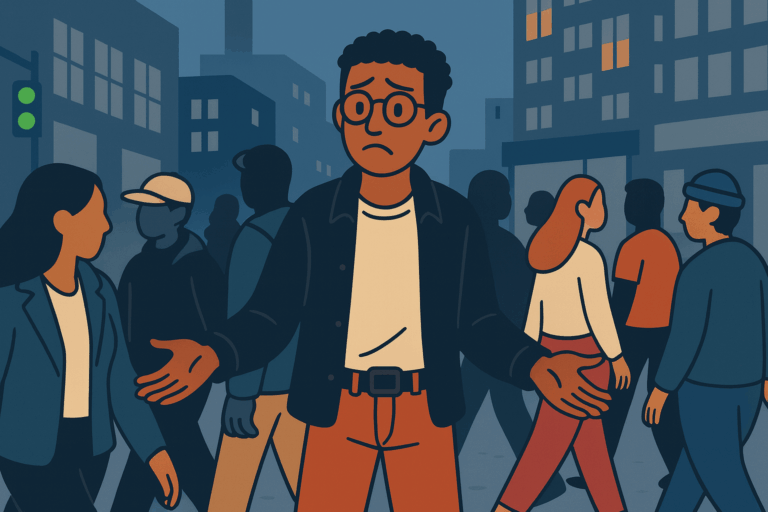

The Principle of Ownership
- Do a responsibility audit. Where in your life are you currently blaming circumstances, other people, or God for outcomes that your own choices contributed to? Name it honestly, because ownership begins with the willingness to see your role clearly before anything else changes.
- Replace complaint with a question. When you catch yourself complaining about something, immediately ask: “What is my role in this, and what can I do about it?” That single shift moves you from victim to agent, and agents change things.
- Apologize and make things right quickly. Ownership expressed in relationship is one of the most powerful trust-builders available to you. Do not delay acknowledgment of failure when it is yours. A prompt, sincere acknowledgment heals more than prolonged justification ever could.
- Stop waiting for conditions to improve before you begin. Ownership says: I will work with what I have, from where I am, starting now. The conditions will never be perfect, and waiting for them to be is itself a choice with consequences.
- Hold yourself to the same standard you apply to others. If you would expect someone else to take responsibility, consistency requires that you hold that same expectation of yourself. The standard that applies to others applies to you first.
Living Without This Principle
When you live without ownership, you become a victim of your own story. Every failure has an external cause. Every setback is someone else’s fault. Every unmet goal is explained by what was done to you, what was withheld from you, or what circumstances prevented. The problem with this posture is not just that it is inaccurate; it is that it is powerless. A person who assigns responsibility for their life entirely to external forces has, by that same logic, assigned the power to change it to those same external forces. You cannot own your future while refusing to own your past. Victimhood may feel like relief from responsibility, but it is also the surrender of agency, and without agency, calling cannot move forward.
What This Principle Unlocks
Ownership unlocks agency, growth, and the ability to change. When you accept responsibility for where you are, you simultaneously reclaim the power to change where you are going. Ownership is not self-blame; it is self-determination. It says: regardless of what happened, I am the one who decides what happens next. That posture is transformative. It turns excuses into action, complaints into solutions, and blame into the focused energy of someone who has chosen to build rather than react. People who walk in ownership are trusted with more, because they are the ones who show up, follow through, and take responsibility whether anyone is watching or not.
Hebrew and Greek Root Words
Hebrew: acharyut (אַחֲרָיוּת): responsibility or accountability; derived from achar (after), implying the person who stands behind their actions and owns the consequences. To take acharyut is to stand behind what you have done and refused to hide from it.
Greek: hekousios (ἑκούσιος): willingly, voluntarily, or of one’s own free choice; used in Philemon 1:14 and 1 Peter 5:2. It implies ownership through voluntary, self-directed action, the opposite of being coerced or acting under compulsion.
Bible Verses on Ownership
Galatians 6:5: “For each one should carry (hekousios) their own load.”
Proverbs 19:3: “A person’s own folly (acharyut) leads to their ruin, yet their heart rages against the Lord.”
Romans 14:12: “So then, each of us will give an account (hekousios) of ourselves to God.”
Ezekiel 18:20: “The one who sins is the one who will die. The child will not share the guilt of the parent, nor will the parent share the guilt of the child. The righteousness of the righteous will be credited to them, and the wickedness of the wicked will be charged against them.”
Examples of People in the Bible Who Used This Principle
The Prodigal Son: The younger son in Jesus’s parable demanded his inheritance before his father’s death, which was essentially wishing his father dead. He took everything and traveled to a distant country, where he squandered it all in reckless living. A severe famine hit, and he found himself hired to feed pigs, so hungry that the pig slop looked appealing. Then the text says he came to himself. Not to the pigs. Not to his employer. To himself. He rehearsed the reality of his own situation, remembered his father’s household where even the servants had more than enough, and made a decision: “I will set out and go back to my father and say to him: Father, I have sinned against heaven and against you. I am no longer worthy to be called your son; make me like one of your hired servants.” He did not blame the famine. He did not blame his friends who had spent the money with him. He did not reframe the story to make himself look better. He owned what he had done. And that ownership, that precise willingness to stand in the truth of his choices without deflection, was the first step that put him on the road home. His father ran to meet him while he was still a long way off (Luke 15:11-24).
Zacchaeus: Zacchaeus was the chief tax collector in Jericho, and he was wealthy. Tax collectors in that system were known to collect more than was required and keep the excess. This was not assumed; it was practiced and accepted. When Jesus came through Jericho, Zacchaeus was short and climbed a sycamore tree to see him over the crowd. Jesus stopped at the tree, looked up, and told Zacchaeus to come down, that he intended to stay at his house that day. The crowd grumbled that Jesus was going to be the guest of a sinner. But something in the encounter with Jesus brought Zacchaeus to a moment of full ownership. He stood up before everyone and said, “Look, Lord! Here and now I give half of my possessions to the poor, and if I have cheated anybody out of anything, I will pay back four times the amount.” He did not say “if anyone thinks I owe them” or “if I can figure it out in time.” He acknowledged the behavior, assigned it to himself, and named a specific, generous remedy. Jesus said, “Today salvation has come to this house.” The ownership came before the celebration (Luke 19:1-10).
Nehemiah: When Nehemiah heard the news about Jerusalem, he did not say the problem was someone else’s to solve. He was in Persia. He had a comfortable position. The broken walls were hundreds of miles away, and he was not responsible for how they got that way. But he sat down and wept. He mourned for days. He fasted and prayed before God, and in that prayer he included himself in the confession: “I confess the sins we Israelites, including myself and my father’s family, have committed against you.” He owned the problem as his own before he had any authority or plan to address it. Then he asked the king for permission to go and rebuild. He organized the families of Jerusalem to each build the section of the wall near their own home, a model of distributed ownership. When enemies threatened and mocked, he did not outsource the discouragement. When sections of the community faced more danger than others, he redistributed resources. The fifty-two-day completion of the wall was the outcome of one man’s decision that a broken thing within his sphere of awareness was his responsibility to fix (Nehemiah 1:1-7; 2:1-8; 3:1-5; 6:15-16).
Tips for Using the Principle of Ownership
Do a responsibility audit. Where in your life are you currently blaming circumstances, other people, or God for outcomes that your own choices contributed to? Name it honestly, because ownership begins with the willingness to see your role clearly before anything else changes.
Replace complaint with a question. When you catch yourself complaining about something, immediately ask: “What is my role in this, and what can I do about it?” That single shift moves you from victim to agent, and agents change things.
Apologize and make things right quickly. Ownership expressed in relationship is one of the most powerful trust-builders available to you. Do not delay acknowledgment of failure when it is yours. A prompt, sincere acknowledgment heals more than prolonged justification ever could.
Stop waiting for conditions to improve before you begin. Ownership says: I will work with what I have, from where I am, starting now. The conditions will never be perfect, and waiting for them to be is itself a choice with consequences.
Hold yourself to the same standard you apply to others. If you would expect someone else to take responsibility, consistency requires that you hold that same expectation of yourself. The standard that applies to others applies to you first.
Connected Principle: Power
Ownership is the gateway to power. When you refuse to take responsibility, you simultaneously surrender your ability to create change, because you have handed that power to the people and circumstances you are blaming. But when you own your situation fully, you reclaim the God-given authority to do something about it. Ownership and power are inseparable: one activates the other. To learn more, read The Principle of Power.